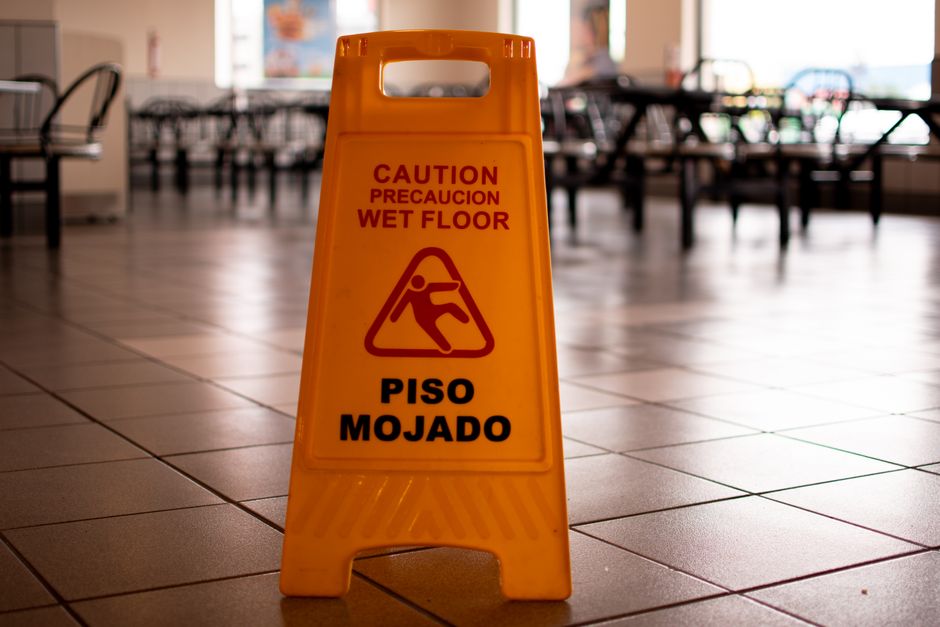
Why Every Law Firm Needs a Clear Strategy for Slip and Fall Cases
A slip and fall attorney operates in one of the most competitive — and most misunderstood — areas of personal injury law. If you're looking for a fast answer on how to handle these cases more effectively, here's what matters most:
Quick-start checklist for slip and fall case success:
- Act fast on evidence — surveillance footage gets overwritten, hazards get repaired, witnesses forget details
- Establish duty of care — confirm the victim was lawfully on the property
- Prove negligence — show the owner knew or should have known about the hazard
- Know your deadline — Oklahoma gives you two years; other states range from one to three years
- Anticipate fault arguments — insurers will try to shift blame onto your client
- Document everything — photos, incident reports, medical records, and witness statements
These cases can deliver real value for your firm — but only with the right systems in place.
Slip and fall accidents are far more serious than people assume. According to the CDC, over 800,000 people are hospitalized each year in the U.S. due to falls. Falls are also the leading cause of injury-related death among older adults. That means there is a steady, significant pool of potential clients who genuinely need legal help — and who often don't know where to turn.
Yet many law firms struggle to convert these leads, build strong cases, or maximize settlement value. The difference between a firm that wins on these cases and one that doesn't usually comes down to process, preparation, and positioning.
I'm Corey Larson, and at Outlier Creative Agency I've spent years helping law firms build the content strategies and digital presence they need to attract and convert slip and fall cases at scale. Understanding what drives a strong slip and fall attorney practice — from intake to settlement — is central to the work we do with personal injury firms every day.
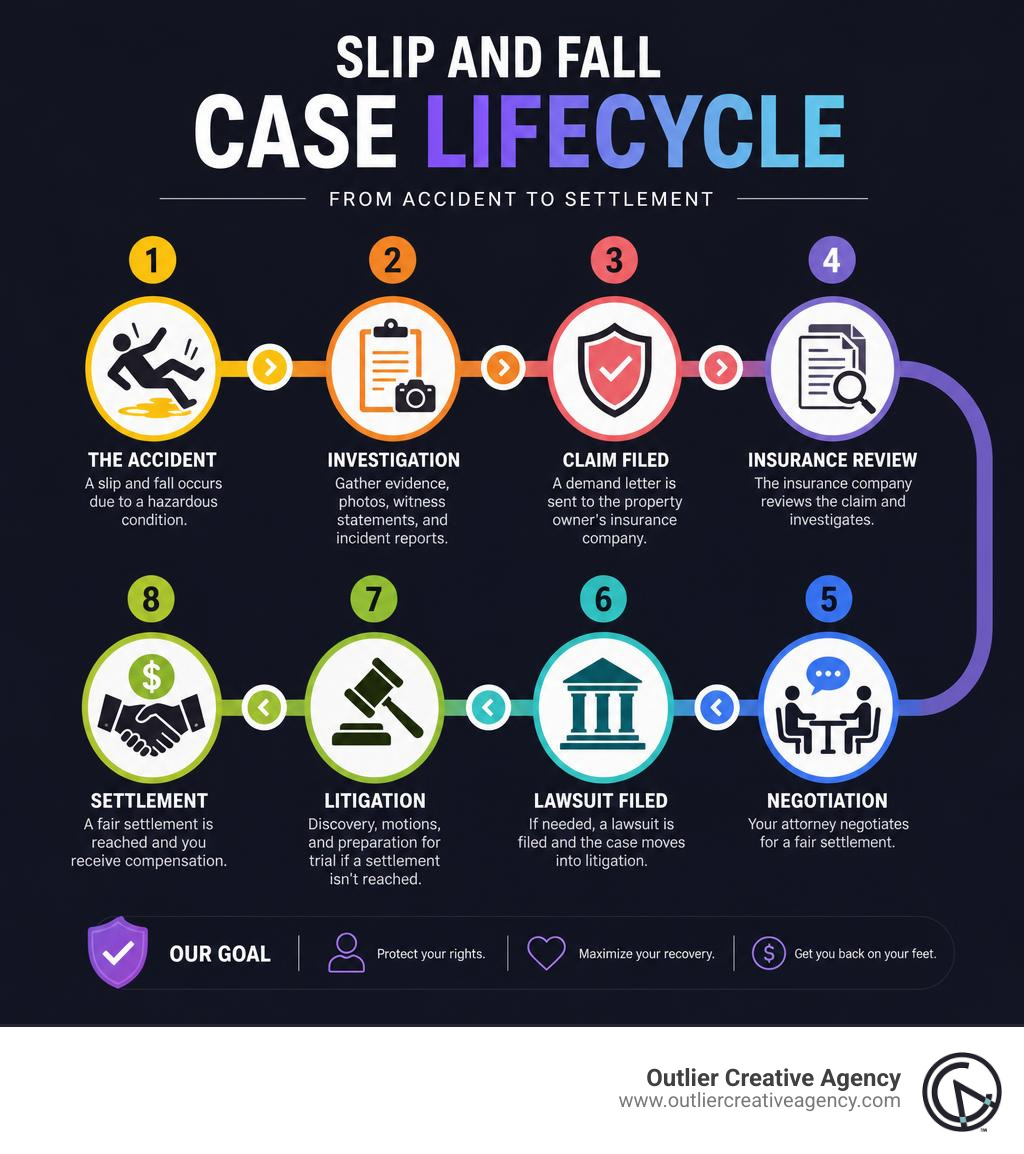
What Does a High-Performing Slip and Fall Attorney Do to Maximize Case Value?
A premier slip and fall attorney does not simply file paperwork and wait for an insurance company to extend a lowball settlement offer. Instead, high-performing attorneys treat every premises liability claim as if it is headed directly to trial.
From the moment a client signs a retainer, the attorney's primary objective is to establish a rock-solid foundation for the claim. This involves proving that the property owner or manager breached their legal duty of care, directly resulting in the client's injuries.
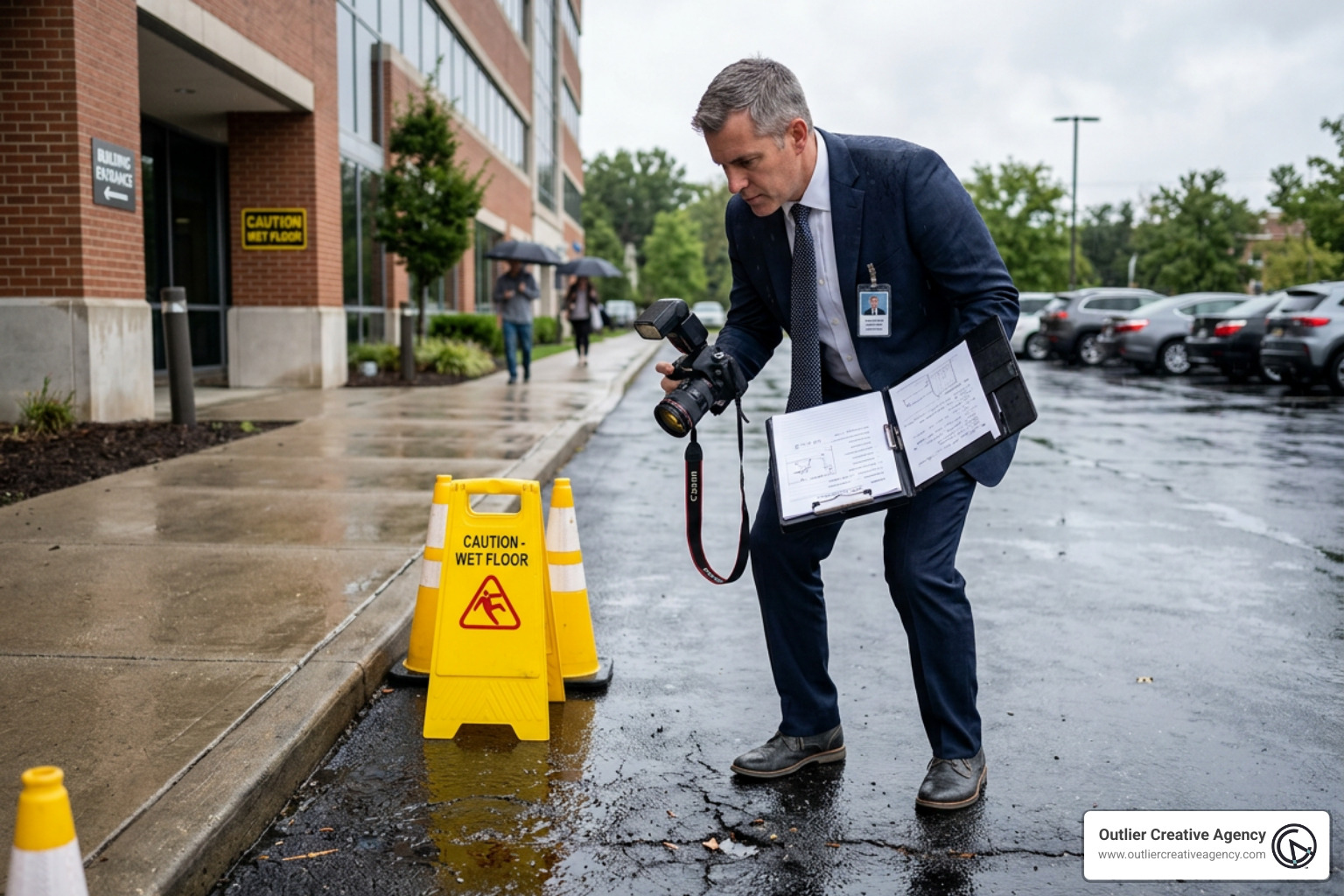
To succeed, a legal team must proactively gather and preserve evidence. Crucial steps include:
- Securing high-resolution photographs and video footage of the hazardous condition before it is repaired.
- Identifying and interviewing eyewitnesses who can testify to the state of the property at the time of the incident.
- Obtaining official incident reports filed with the business or local authorities.
- Analyzing medical records to establish a direct causal link between the fall and the diagnosed injuries.
Building this level of authority in your local market starts long before a client walks through your door. By implementing robust Law Firm SEO: Leveraging Content Distribution for Increased Visibility, firms can educate potential clients on these critical steps.
When you clearly explain how you establish liability, you build immediate trust. For instance, leading firms like those featured on Florida Slip and Fall Lawyers - sliporfall.com demonstrate their deep expertise by showing clients exactly how they uncover hidden property hazards.
Proving Negligence and Constructive Knowledge in Premises Liability
Establishing liability in a premises liability case hinges on proving that the property owner had either actual or constructive knowledge of the hazard.
- Actual Knowledge: The property owner or an employee created the hazard (e.g., spilling a liquid) or was directly told about it prior to the accident.
- Constructive Knowledge: The hazard existed for such a length of time that the owner should have discovered and resolved it through the exercise of ordinary care.
In highly competitive legal environments, proving constructive knowledge is often the battlefield where cases are won or lost. For example, under Florida Statute § 768.0755, if a person slips and falls on a transitory foreign substance in a business establishment, they must prove the business had actual or constructive knowledge of the dangerous condition.
Attorneys must dive deep into discovery to unearth this proof. As highlighted by the team at Florida Slip And Fall Lawyer | Premises Liability | Lisa S. Levine, P.A., key evidence often includes:
- Maintenance and Cleaning Logs: Uncovering gaps in scheduled inspections or falsified sweep sheets.
- Surveillance Footage: Reviewing security videos to determine exactly how long a spill sat on the floor before the fall occurred.
- Internal Communications: Finding emails, texts, or slack messages showing that employees were aware of a recurring hazard (like a leaking commercial refrigerator) but ignored it.
Navigating Commercial vs. Private Property Claims as a Slip and Fall Attorney
The path to recovery diverges significantly depending on whether the injury occurred on commercial or private property. A skilled slip and fall attorney must tailor their approach to the specific insurance policies and legal standards at play.
+----------------------------------+----------------------------------+
| Commercial Property Claims | Private Property Claims |
+----------------------------------+----------------------------------+
| • Covered by Commercial General  | • Covered by Homeowner or Renter |
|   Liability (CGL) policies |   insurance policies |
| • Higher policy limits | • Lower, strict policy limits |
| • Stricter statutory standards   | • Often involves social dynamics |
|   for guest safety (Invitees) |   (Licensees) |
+----------------------------------+----------------------------------+
On commercial properties, visitors are typically classified as invitees—individuals invited onto the premises for business purposes. Property owners owe invitees the highest duty of care, which includes a duty to inspect the property regularly for hidden dangers.
On private residential properties, visitors are often classified as licensees—social guests entering the property for non-commercial reasons. Here, the homeowner generally only has a duty to warn guests of known, hidden hazards.
Furthermore, as noted by the Boston Slip & Fall Lawyer | Personal Injury Attorney, pursuing a private property claim can be socially sensitive, as clients are often reluctant to sue friends or family members. An experienced attorney can ease these anxieties by explaining that the claim is filed against the homeowner's insurance policy, not the individual's personal pockets.
Key Legal Hurdles: Statutes of Limitations and Comparative Fault
Every personal injury practice must navigate strict procedural rules and defensive tactics. When marketing your firm's services, addressing these hurdles head-on builds your credibility as an authoritative legal expert.
Using strategic content to explain these complex legal concepts is a cornerstone of our Local SEO Checklist for Law Firms: Geo-Targeted Strategies That Drive Consultations. It shows prospective clients that you understand the unique local laws governing their claims.
| Jurisdiction | Statute of Limitations | Negligence Standard | Recovery Threshold |
|---|---|---|---|
| California | 2 Years | Pure Comparative | Recoverable even if 99% at fault |
| Texas | 2 Years | Modified Comparative | Barred if plaintiff is > 50% at fault |
| Oklahoma | 2 Years | Modified Comparative | Barred if plaintiff is > 50% at fault |
| Florida | 2 Years | Modified Comparative | Barred if plaintiff is > 50% at fault |
| Massachusetts | 3 Years | Modified Comparative | Barred if plaintiff is 51% or more at fault |
| North Carolina | 3 Years | Contributory Negligence | Barred if plaintiff is even 1% at fault |
Managing Strict Deadlines and Oklahoma's Two-Year Limit
Time is the ultimate enemy of a premises liability claim. In Oklahoma, California, and Texas, the statute of limitations for personal injury lawsuits is strictly two years from the date of the injury.
While two years may seem like a generous window, waiting to file is a recipe for disaster. Over time, physical evidence disappears, surveillance tapes are recorded over, and witness memories fade.
Early case acquisition and immediate claim preservation are paramount. As the legal experts at Durham Slip and Fall Accident Lawyers | No Fee, Unless We Win emphasize, initiating an investigation within days of the accident—rather than months—frequently makes the difference between a maximum settlement and a dismissed claim.
Overcoming Comparative Fault Defenses to Protect Client Compensation
Insurance defense lawyers almost always try to blame the victim. They will argue that the hazard was "open and obvious," or that the plaintiff failed to exercise "ordinary care" (e.g., they were looking at their phone while walking).
How this affects your client's compensation depends heavily on your state's comparative fault laws:
- Modified Comparative Fault (50% or 51% Bar): In states like Texas, Oklahoma, and Florida, a victim can recover damages as long as their share of the liability does not exceed the state's threshold (typically 50% or 51%). However, their compensation is reduced proportionally by their percentage of fault. If they cross that line, they get nothing.
- Pure Contributory Negligence: In strict jurisdictions like North Carolina, if a plaintiff is found even 1% responsible for their fall, they are completely barred from recovering any compensation.
To defeat these defenses, a slip and fall attorney must present clear, undeniable evidence of the property owner's primary liability. As explained by the team at Jacksonville Slip and Fall Lawyer | Von Roenn Law, this requires showing that the property owner's failure to maintain safe premises was the dominant, direct cause of the accident, overshadowing any minor distractions the plaintiff may have had.
Operational Excellence: Optimizing Intake and Negotiating with Insurers
For personal injury law firms, operational efficiency is just as critical as courtroom skill. You can run the most sophisticated marketing campaigns in the world, but if your internal processes are broken, you will leak valuable cases.

At Outlier Creative Agency, we help firms align their marketing with operational reality. By using Attract the Right Cases: Targeted Marketing Strategies for Your Law Firm, you can ensure your firm attracts high-value premises liability cases while screening out unviable claims early.
How a Slip and Fall Attorney Can Streamline the Intake Process
The speed and quality of your intake process directly dictate your conversion rates. Slip and fall victims often call multiple firms; the firm that answers first and provides the most empathetic, professional experience almost always wins the case.
To build a high-converting intake system, successful firms implement:
- Dedicated Intake Specialists: Rather than relying on busy paralegals or receptionists, utilize trained intake professionals whose sole focus is qualifying and signing new leads.
- Immediate Digital Retainers: Send sign-up documents via text or email during the initial call to secure the client instantly.
- Rigorous Case Screening: Train your team to ask targeted questions during the first call to filter out unviable cases (e.g., verifying the date of the accident, checking for medical treatment, and identifying the property type).
As noted by the Slip and Fall Lawyer Atlanta | FREE Attorney Consultation, treating intake as a core business function—rather than an administrative afterthought—dramatically improves both the client experience and the firm's bottom line.
Frequently Asked Questions about Slip and Fall Case Management
What are the most common causes of slip and fall accidents in metro areas?
In major metropolitan areas like Los Angeles and Austin, slip and fall accidents are frequently caused by:
- Wet or slick floors due to spills, leaks, or recent mopping without warning signs.
- Poorly lit stairwells, parking structures, or walkways.
- Broken, missing, or unstable handrails.
- Unstable, cracked, or uneven walking surfaces, including damaged sidewalks and unsecured rugs.
What types of compensation can victims seek in a premises liability claim?
Victims of slip and fall accidents are entitled to seek both economic and non-economic damages, including:
- Medical Expenses: Coverage for emergency room visits, surgeries, physical therapy, and future medical care.
- Lost Wages: Compensation for time missed at work due to recovery.
- Diminished Earning Capacity: If the injury results in a long-term disability that prevents the victim from returning to their career.
- Pain and Suffering: Financial recovery for physical pain, emotional distress, and loss of enjoyment of life.
How do you prove a property owner had constructive knowledge of a hazard?
Proving constructive knowledge requires establishing that the hazard existed long enough that a reasonable property owner should have found and fixed it. This is typically proven using:
- Inspection and Maintenance Logs: Showing that employees failed to inspect the area for hours.
- Prior Complaints: Documenting that other visitors or employees had reported the same hazard previously.
- Video Surveillance: Analyzing security footage to track the exact timeline of the hazard.
- Expert Testimony: Utilizing forensic engineers or safety experts to testify on industry standards for property maintenance.
Conclusion
Succeeding as a slip and fall attorney requires a perfect blend of legal precision and operational efficiency. By mastering the nuances of premises liability, acting swiftly to preserve evidence, and streamlining your firm's intake processes, you can maximize case values and build a highly profitable practice.
However, attracting those high-value cases in competitive markets like Los Angeles and Austin requires a sophisticated, compliance-focused marketing partner.
At Outlier Creative Agency, we specialize in helping personal injury law firms scale their caseloads through custom search engine optimization, high-performing web design, and high-ROI PPC Advertising for Law Firms. We understand the ethical rules and competitive dynamics of legal marketing, allowing us to position your firm as the leading authority in your market.
Ready to dominate your local search results and attract the right cases? Contact Outlier Creative Agency today to book your legal marketing strategy session.