
Understanding the Crisp Software Company Ecosystem: Retail AI vs. Customer Messaging
Crisp software company refers primarily to Crisp Inc., a vertical AI and collaborative commerce platform founded in 2016 that unifies retail point-of-sale, distributor, and supply chain data for over 7,000 consumer packaged goods (CPG) brands, including 90 of the top 100 CPG manufacturers. It is distinct from Crisp Chat, a bootstrapped customer messaging and live chat platform headquartered in France, and Crisp DNA, a Stockholm-based agile coaching consultancy. Understanding which Crisp entity you are evaluating is essential before any procurement decision. This guide from Outlier Creative Agency's legal marketing perspective breaks down each entity's market positioning, core capabilities, pricing, and growth trajectory. The same vendor-disambiguation and data-strategy discipline applies when law firm owners, managing partners, and legal marketing directors choose intake platforms, live chat tools, call-tracking vendors, CRM systems, or advertising dashboards without verifying the exact entity, data model, compliance fit, and integration requirements.
When researching a modern SaaS vendor, brand confusion is common. Multiple technology organizations operate under the Crisp name across distinct markets. In legal marketing, managing partners and marketing directors often face similar entity confusion when targeting specialized legal niches versus broad practice areas, or when comparing general customer support software against tools built for legal intake and bar-compliant advertising workflows. Understanding exact market positioning protects against costly procurement and integration mistakes.
| Attribute | Crisp Inc. (Retail Data AI) | Crisp Chat (Customer Messaging) | Crisp DNA (Agile Consultancy) |
|---|---|---|---|
| Primary Focus | Retail analytics, collaborative commerce, and vertical AI | Omnichannel customer support, live chat, and CRM | Agile coaching, technical architecture, and consulting |
| Target Market | CPG brands, retail buyers, and national distributors | SMBs, customer support teams, and digital sales desks | Software engineering teams and enterprise leadership |
| Business Model | Tiered enterprise SaaS based on Points of Distribution (PODs) | Bootstrapped SaaS with flat-rate multi-channel plans | Decentralized consulting network and open-source practices |
| Key Capability | Automated POS, EDI, and phantom inventory diagnostics | Multi-inbox message triage and customer support AI copilots | Agile team empowerment and organizational design |
| Website | Crisp: The leading vertical AI company for retail data | The AI Customer Support Platform for Every Business - Crisp | We are partners for sustainable change | Crisp | Crisp |
The Retail Data Leader: Crisp Software Company Profile
Founded in 2016 by serial technology entrepreneur Are Traasdahl (who previously exited mobile marketing platform Tapad for $360M) and Chief Product Officer Dag Liodden, Crisp Inc. operates as a collaborative commerce platform built to solve supply chain disconnects. The company engineers vertical AI to connect enterprise data directly to retail execution.
Operating through major hubs across the United States, including key facilities in Bentonville, Arkansas, Crisp unifies fragmented retail portals, distributor feeds, and syndicated market data. This integration allows enterprise consumer packaged goods (CPG) suppliers to maintain daily, granular visibility into physical store shelves, distribution centers, and regional velocity metrics.
By structuring raw commerce metrics into traceable operational actions, the Vertical AI platform that drives shareholder value empowers over 7,000 businesses. In fact, 90 of the top 100 CPG manufacturers rely on the gocrisp data foundation to safeguard supply lines, optimize retail compliance, and eliminate excess inventory across multi-regional distribution networks.
For legal practices, the relevant takeaway is the operating principle: reliable decisions require unified source data. A personal injury firm cannot accurately measure case acquisition cost if call tracking, form fills, live chat, signed retainers, and matter values live in disconnected systems. A family law or criminal defense firm faces the same issue when lead sources are mislabeled or when advertising reports are not reconciled with intake outcomes.
Customer Messaging and Agile Entities: Crisp Chat and Crisp DNA
In contrast to retail supply chains, Crisp Chat was established in 2015 by co-founders Baptiste Jamin and Valerian Saliou. Headquartered in Nantes, France, this entity operates as a 100% bootstrapped, remote-first customer messaging ecosystem serving over 600,000 global users.
The software consolidates website chat widgets, email ticketing, WhatsApp, Instagram, and Facebook Messenger into an omnichannel shared inbox paired with an integrated CRM, knowledge base tools, and a no-code AI chatbot builder designed for rapid customer engagement.
Law firms evaluating any customer messaging platform should also review confidentiality, intake disclaimers, conflict-screening procedures, data retention, and state bar advertising rules before routing prospective clients through automated chat or AI-assisted triage. General customer support software can be useful, but legal intake workflows require additional safeguards around attorney-client relationship disclaimers and jurisdiction-specific compliance.
A third entity, Crisp DNA, is a Stockholm-based agile coaching consultancy known for open-sourcing its operational blueprint. It operates without traditional management hierarchies or a CEO, focusing on software engineering architecture, product team coaching, and organizational design for high-velocity software engineering organizations.
Core Products and Capabilities of Crisp Retail AI
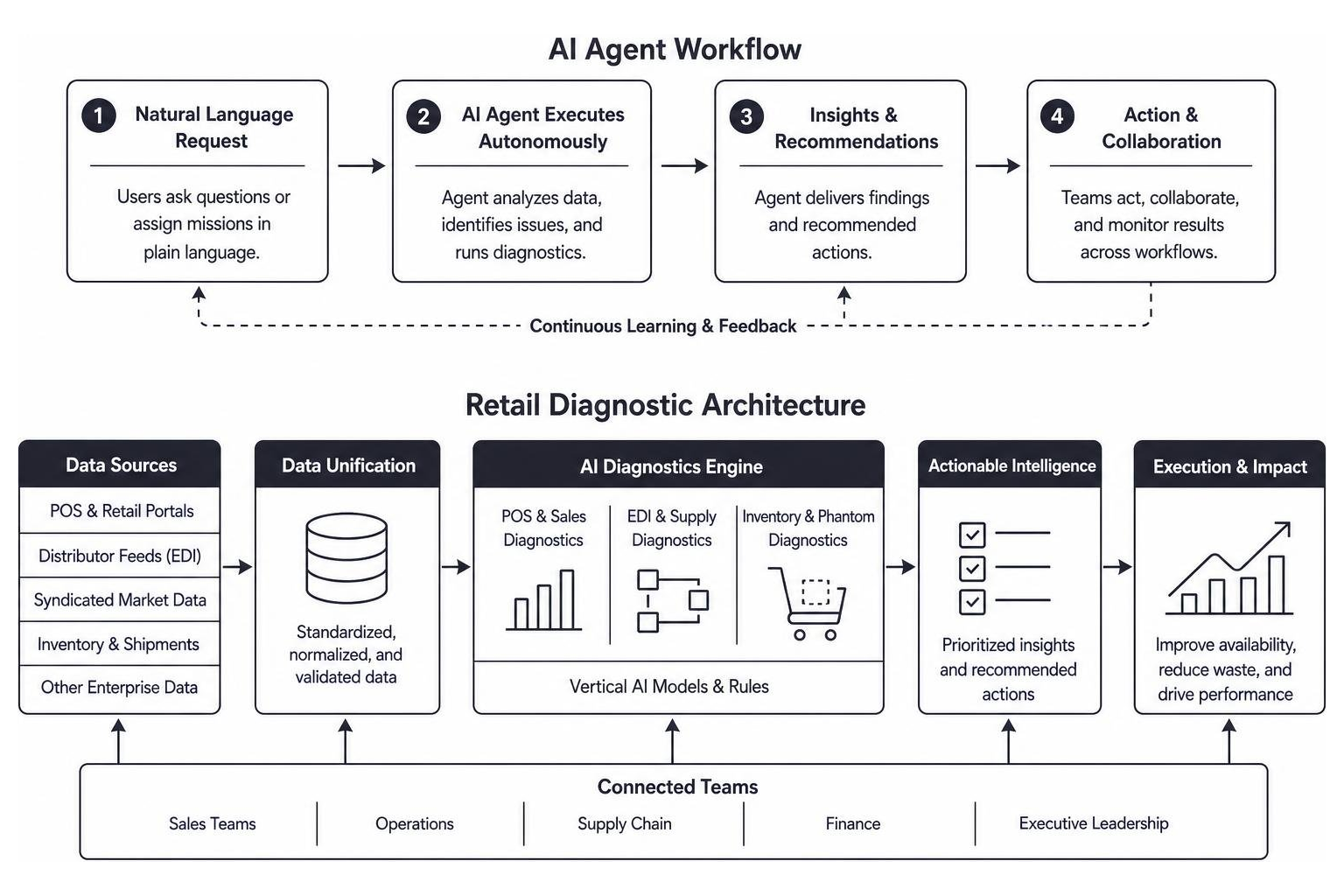
In enterprise supply chains and consumer goods distribution, disconnected spreadsheets and delayed retail portals create significant operational friction. The crisp retail data engine standardizes disparate data streams into a single source of truth across sales, operations, and executive leadership teams, eliminating manual data wrangling across disparate vendor portals.
This matters to legal marketing leaders because the same data architecture problem appears in law firm growth systems. Intake teams, PPC campaigns, SEO landing pages, call recordings, CRM stages, signed matters, and revenue reports often sit in separate platforms. While Crisp Retail AI is built for CPG and retail operations rather than law firm marketing, its structure is a useful benchmark for how a modern firm should think about clean attribution, integrated reporting, and operational accountability.
Autonomous AI Agents and Collaborative Commerce
Crisp pairs underlying data feeds with vertical AI agents capable of carrying out autonomous business missions via natural language prompts:
- Monday Morning Reporting: Automatically compiles weekend store-level sales volumes, category velocity, and distributor shipments into executive briefs before weekly commercial meetings, highlighting revenue risks and growth opportunities.
- Phantom Inventory Detection: Identifies stores showing on-hand inventory balances in central databases despite zero sales scans over extended periods, flagging ghost stock for immediate field auditing and merchandising correction.
- Out-of-Stock (OOS) Prevention: Analyzes Point of Sale (POS) velocity alongside regional weather changes, localized demand spikes, and distributor lead times to trigger proactive replenishment orders before shelves empty.
- New Item Launch Tracking: Tracks initial distribution adoption, store-level velocity, and scan rates across retail partner networks during novel SKU rollouts, providing immediate feedback on promotional adoption.
- Promotion Management and Verification: Evaluates trade promotion lift versus baseline sales volumes across individual retail store clusters to measure real return on ad spend and prevent costly trade spend leakage.
For attorneys, the direct analogue is not shelf inventory. It is lead and case inventory. A law firm should know which campaigns generated qualified consultations, which practice-area pages produced signed retainers, which referral sources created profitable matters, and which intake bottlenecks caused potential clients to drop off. OCA uses this same data-first mindset when advising firms on SEO, paid media, website conversion, social content, and video strategy.
Supply Chain EDI, POS Integration, and Zero-Waste Analytics
Beyond analytics dashboards, the platform incorporates Electronic Data Interchange (EDI) processing to handle retail compliance documents, automated purchase ordering, and space planning planograms across complex retail networks.
By unifying data across retail points of sale, foodservice distributors (which historically operate across 1.8 million out-of-home dining and hospitality locations without standard POS reporting), and back-office ERPs, the software creates a transparent commerce graph. This end-to-end data transparency helps eliminate overproduction, prevent stockouts, and advance a zero-waste supply chain while optimizing working capital for suppliers.
Law firms can apply a similar due diligence framework to their own marketing stack. Before signing a long-term contract for analytics, chat, CRM, call tracking, or advertising software, confirm whether the platform can export data, map lead stages, support compliance review, and connect marketing activity to signed cases rather than vanity metrics alone.
Business Growth, Funding Stats, and Acquisition Trajectory
Crisp has established a strong financial foundation, raising a total of $186.5M across 8 funding rounds with backing from major institutional investors including FirstMark Capital, Blue Cloud Ventures, DNX Ventures, and Prologis Ventures. Generating an estimated $24.8M in annual recurring revenue, the company employs 211 professionals across 11 countries, reflecting a yearly headcount expansion of +20.0%.
For law firms and corporate legal departments managing corporate governance, vendor vetting, and M&A compliance, evaluating a tech provider's capitalization structure is standard practice before enterprise onboarding. Managing partners reviewing legal marketing and operational technology can review our analysis of crisp careers for additional context on organizational scaling and technical talent acquisition.
From a law firm management perspective, these figures also show why vendor stability matters. A marketing dashboard, CRM, or intake platform becomes part of a firm's daily operating system. Before adopting any SaaS vendor, firms should ask whether the company has sufficient support capacity, clear product ownership, data security documentation, export rights, and a roadmap that will not disrupt intake or advertising compliance workflows.
How Does the Crisp Software Company Price Its Platform?
Crisp utilizes an annual subscription model structured around Points of Distribution (PODs), calculated as the number of active product SKUs multiplied by total retail store locations:
- Tier 1 (0 to 50 PODs): Approximately $18,000 per year for emerging brands establishing regional retail footprint and foundational distribution.
- Tier 2 (50 to 75 PODs): Approximately $25,000 per year for mid-market suppliers scaling multi-state distribution networks.
- Tier 3 (75 to 100 PODs): Approximately $31,000 per year for established brands managing complex retail networks and diverse SKU portfolios.
- Enterprise Tier (100+ PODs): Custom pricing incorporating full EDI compliance services, tailored data warehouse connectors, custom BI feeds, and tailored AI agent workflows.
Prospective software buyers can evaluate detailed practitioner feedback across our crisp co reviews breakdown to benchmark user satisfaction, implementation timelines, and measurable platform ROI.
For legal practices, the pricing lesson is to calculate technology cost against signed-case value, not against dashboard access alone. A plaintiff firm spending heavily on Google Ads, local SEO, or video campaigns should understand whether reporting tools can connect source, keyword, landing page, consultation, signed retainer, and eventual fee outcome. Without that chain of attribution, even a low-cost tool can create expensive blind spots.
Market Performance, Inc. 5000 Ranking, and Acquisitions
Crisp ranks No. 11 among the fastest-growing AI and Data companies on the 2026 Inc. 5000 List (ranking No. 116 overall and No. 1 in Arkansas). The platform also secured the No. 7 spot on Fast Company's Most Innovative Companies in Retail and No. 26 on the Deloitte Technology Fast 500.
This aggressive growth has been accelerated by targeted strategic acquisitions:
- ATLAS Technology Group (2023): Expanded retail analytics and category management tools for major retail suppliers.
- Integral Group (2023): Integrated enterprise EDI capabilities, compliance engines, and automated document exchange protocols.
- Shelf Engine (2025): Added automated replenishment and demand-forecasting AI models to reduce perishable food waste in grocery channels.
- Atheon Analytics (2025): Expanded European retail footprint and grocery data visualization capabilities across key international supermarkets.
- ClearBox Analytics (2025): Strengthened space planning, shelf optimization, and planogram diagnostic tools across major retail accounts.
Acquisition activity is also relevant to law firms conducting vendor reviews. When a platform grows through acquisitions, buyers should confirm which products are fully integrated, which support teams own implementation, and whether data models remain consistent across legacy systems. The same questions apply when a legal marketing vendor bundles SEO, PPC, social media, website design, email, and video reporting into one performance dashboard.
Frequently Asked Questions About Crisp Software
What core problem does Crisp solve for retail brands and distributors?
Consumer goods manufacturers often face fragmented retail vendor portals, mismatched syndicated spreadsheets, and delayed distributor shipments. Crisp connects directly to retail and distributor platforms, cleansing, standardizing, and feeding daily store-level data into unified dashboards and BI tools to eliminate blind spots and reduce stockouts.
For law firms, the comparable problem is fragmented marketing and intake data. If call tracking, form submissions, chat leads, consultation outcomes, and signed matters are not reconciled, managing partners cannot accurately determine which channels are producing profitable cases.
How do vertical AI agents differ from generic horizontal AI models?
Horizontal AI models provide broad text summaries based on generic training data. Vertical AI agents are purpose-built on an enterprise's verified transactional foundation. In retail, this means AI recommendations connect directly to underlying POS scans, EDI feeds, and warehouse inventories, enabling accurate operational decisions like ordering and planogram updates.
In legal marketing, the same distinction matters for compliance and performance. AI-assisted reporting is only useful if it is grounded in verified campaign, intake, and case data, and if outputs are reviewed against bar association advertising rules, confidentiality obligations, and practice-area-specific messaging standards.
Which companies has Crisp acquired to expand its analytics capabilities?
Crisp has acquired ATLAS Technology Group, Integral Group, Shelf Engine, Atheon Analytics, and ClearBox Analytics to build a unified commerce and retail analytics ecosystem.
Why is Outlier Creative Agency analyzing a retail software company?
OCA covers this topic because law firm leaders frequently evaluate SaaS tools that affect marketing attribution, intake workflows, CRM quality, and advertising compliance. Crisp is a useful case study in entity disambiguation, vertical AI, data integration, pricing analysis, and vendor due diligence. Those same disciplines help attorneys avoid buying the wrong tool, misreading reports, or building growth strategies on incomplete data.
Conclusion: Strategic Data Lessons for Legal Practice Leaders
Whether evaluating enterprise supply chain platforms or building a high-growth legal practice, sustainable expansion relies on clean data, automated workflows, and clear market differentiation.
Just as top consumer brands rely on unified data pipelines to eliminate operational waste, law firm owners, managing partners, and legal marketing directors must align their intake pipelines, ethical advertising protocols, and digital outreach to drive reliable client acquisition.
The practical takeaway from the Crisp software company ecosystem is simple: do not choose technology by name recognition alone. Verify the exact entity, confirm the target market, map integrations before signing, and require reporting that connects activity to business outcomes. For law firms, that means connecting SEO visibility, PPC spend, social media engagement, website conversions, email follow-up, and video performance to qualified consultations and signed matters while staying aligned with legal ethics rules.
At Outlier Creative Agency, we build data-driven marketing systems exclusively for law firms across the country from our Los Angeles and Austin teams. By combining state bar compliance awareness with comprehensive SEO, paid advertising, social media strategy, law firm website design, email marketing, and high-converting video production for legal services, we help legal practices build authoritative brands and measure growth with greater clarity.